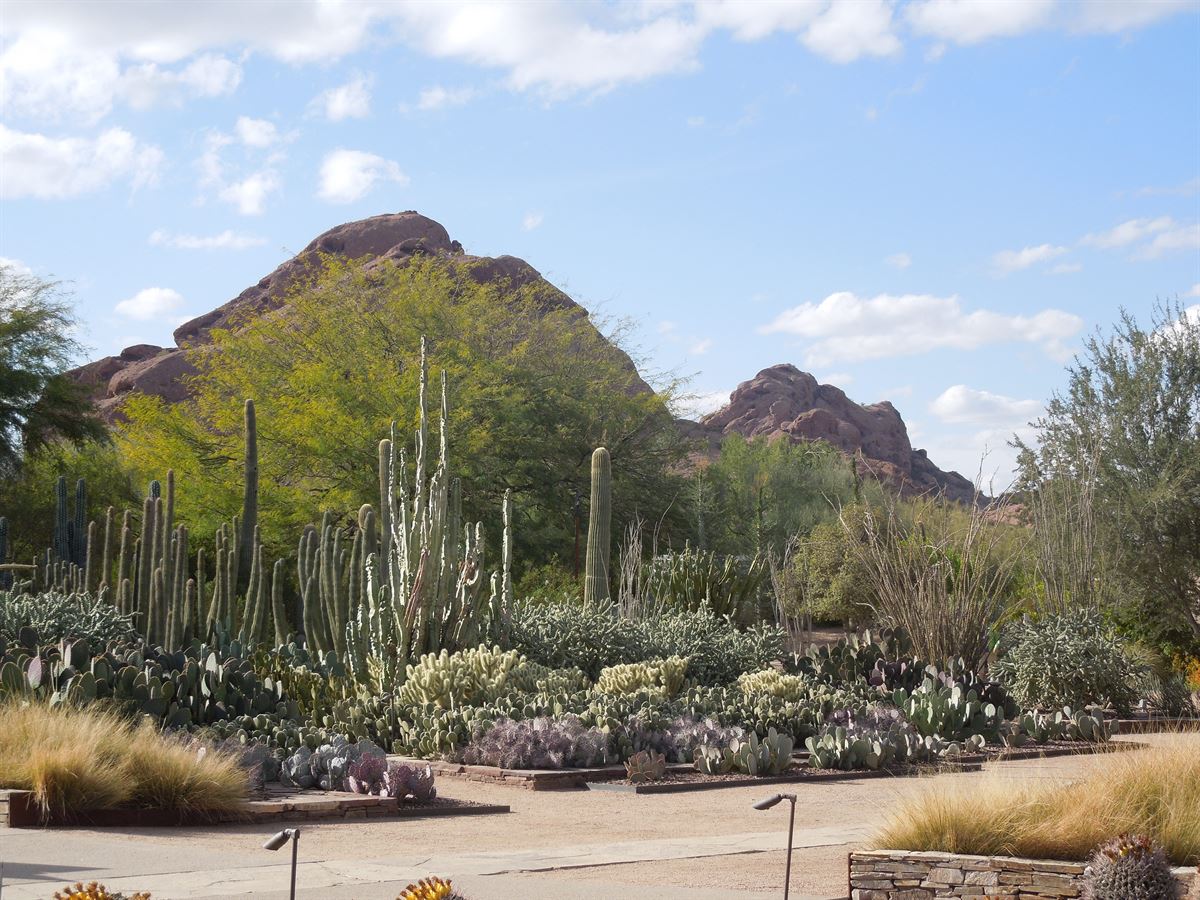
A water-wise yard does not have to look bare. Some of the most beautiful gardens in Scottsdale are built around plants that evolved for this climate, with layers of texture, seasonal color and shade that make the outdoors usable for more of the year. The goal is to work with the desert instead of against it: choose plants that handle heat and sun, water them efficiently and let rock, stone and structure carry part of the design.
Plants are the heart of the garden. Native and desert-adapted species handle our summers and our soil far better than many traditional ornamentals. Palo verde trees offer filtered shade and bright yellow spring blooms. Desert spoon and agave add strong, sculptural shapes. Brittlebush brings a burst of yellow flowers, and lantana provides long-lasting color and draws butterflies. Group plants with similar water and sun needs together so each area can be watered the right way, and leave room for each plant to reach its mature size.
Drip irrigation is the standard for a reason. Instead of spraying water across the whole yard, drip lines and emitters deliver water slowly to the roots of each plant, which means less evaporation and less runoff. A smart controller lets you adjust the schedule through the seasons, watering more deeply and less often as plants get established. Check emitters from time to time, because a clogged or broken one can quietly stress a plant or waste water.
Decomposed granite and rock give a desert garden its finished look. Decomposed granite works well for paths, seating areas and ground cover between plants, and it comes in several colors that can match your home. Larger rock, river stone and boulders add contrast and natural character. A layer of rock over the soil also helps hold moisture and keeps weeds down, especially when the area is prepared and graded properly before it goes in.
Hardscape turns a yard into an outdoor living space. Paver patios, walkways, seat walls, fire pit areas and borders define how you move through the garden and where you gather. Pavers come in many shapes and colors and can be laid over a compacted base so they stay level. Plan hardscape and planting together so trees end up where they will shade a patio, and paths lead naturally to the places you want to use.
Lighting and water features add the finishing touches. Low-voltage landscape lighting can highlight trees, agave and walls, light up paths for safety and let you enjoy the yard on warm evenings. A small waterfall, fountain or pondless water feature brings sound and movement to the garden. Features that use a recirculating pump reuse the same water instead of running it to waste, and keeping them compact and partly shaded helps reduce evaporation.
Monsoon season should shape the design too. Summer storms can bring heavy rain in a short time, and water that has nowhere to go can wash out rock, erode soil or pool against the house. Good grading moves water away from foundations, and features like dry creek beds, swales and rock-lined channels can guide runoff through the yard and even direct it toward trees and plants that benefit from the extra water.
Timing matters when you plant. In the Phoenix area, fall is generally the best season to plant most trees, shrubs and perennials, because the cooler months give roots time to grow before the summer heat returns. Spring can also work for many plants, while planting in the middle of summer puts extra stress on them. A good plan can be built in phases, starting with grading, irrigation and hardscape, then adding plants when the season is right.
Ready to turn your yard into a water-wise desert garden? Call (602) 206-3203 — we answer 24/7. Your first visit is free: we evaluate your property and give you a free estimate.