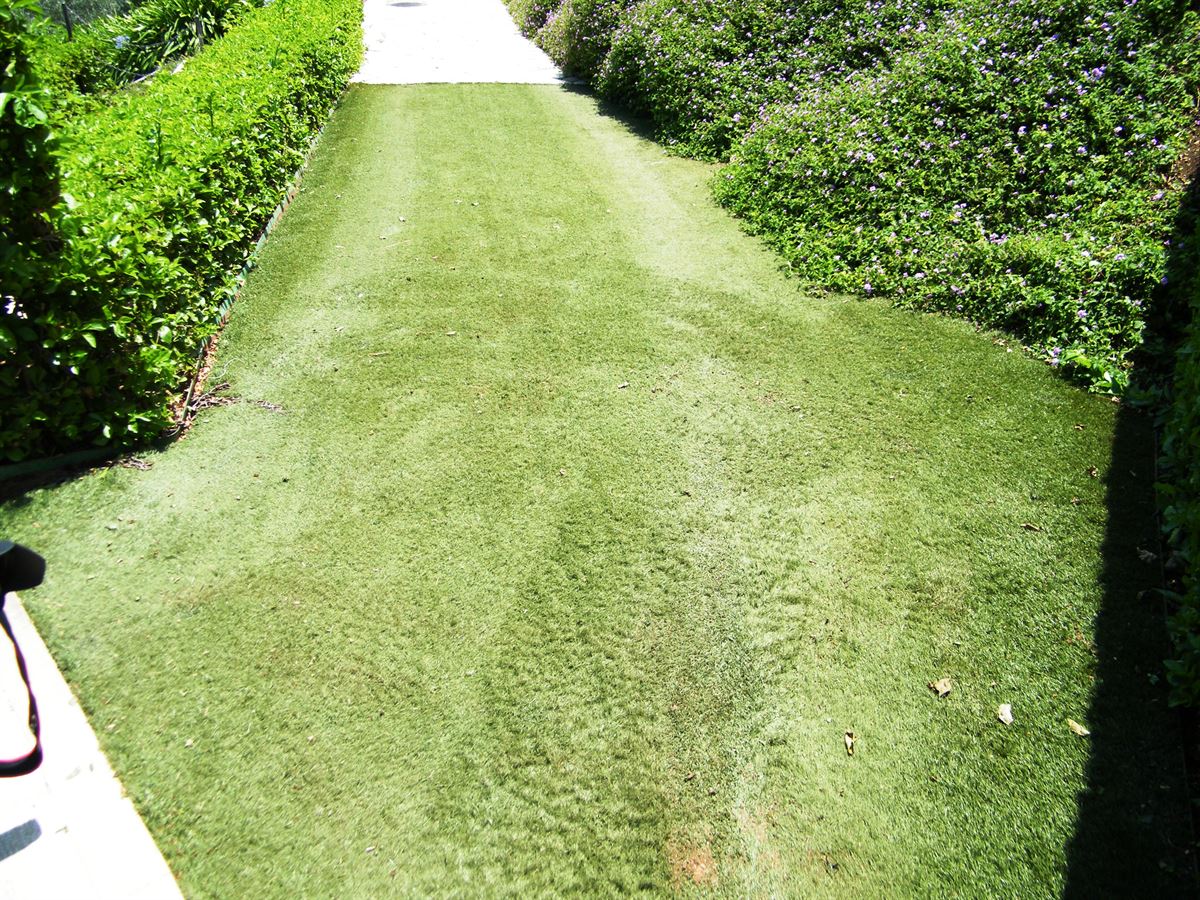
Keeping a natural lawn green through a Phoenix summer takes a lot of water, time and patience. That is why many homeowners across Scottsdale, Phoenix, Glendale and Peoria are looking at artificial turf for front yards, backyards, play areas and dog runs. Done well, it gives you a clean, green space all year with far less upkeep. Done poorly, it can drain badly, wrinkle, smell or get uncomfortably hot. The difference is almost always in the planning and the installation.
The first question is whether it is time to make the change. A natural lawn that needs constant watering, has bare patches or struggles in shady or high-traffic spots is a good candidate. So is older artificial turf that has faded, flattened, separated at the seams or started to hold odors. If the old turf is simply dirty, a deep cleaning and fresh infill may buy some time, but once the backing is breaking down or the base has sunk, replacement is usually the better investment.
Base preparation is the part you never see and the part that matters most. The existing grass, roots and turf need to be removed, and the soil excavated to the right depth. A compacted base of crushed rock or decomposed granite is then spread, graded and compacted in layers. That base gives the turf a smooth, firm surface and, just as important, lets water pass through. Skipping steps here is what leads to dips, puddles and lumps a year or two later.
Drainage deserves special attention in the desert. Our soil can be hard and slow to absorb water, and monsoon storms can drop a lot of rain in a short time. The base should be sloped slightly away from the house and toward a place where water can go, and the turf itself should have a backing designed to drain. In yards with pets, good drainage also helps rinse away urine so it does not build up and cause odors.
Heat is the honest downside of artificial turf in Arizona. Synthetic grass can get much hotter than natural grass in direct summer sun, hot enough to be uncomfortable for bare feet and paws. You can reduce the problem by planning shade with trees, shade sails or a pergola, choosing products and lighter colors designed to run cooler, using infill made for heat reduction, and rinsing the surface with a hose before kids or pets use it on hot afternoons. It is worth being realistic: turf in full sun at midday in July will be warm no matter what.
Infill is the material brushed down between the blades. It helps the grass stand upright, protects the backing from the sun, adds weight so the turf stays in place and gives the surface some cushion. There are several types, including silica sand, coated sand and options made for pets or for cooling. The right choice depends on how you use the yard, so ask about the options instead of accepting whatever is cheapest.
Seams and edges are where a careful installation shows. Turf comes in rolls, so larger areas need seams, and those seams should be joined with the grain running the same direction so the lawn looks like one piece. Edges along sidewalks, planters and walls should be cut cleanly and secured so they do not curl or lift over time. A border of pavers, curbing or rock can give the turf a finished look and help hold it in place.
Artificial turf is low maintenance, not no maintenance. Expect to remove leaves and debris, rinse the surface now and then, brush the blades against the grain in heavy-traffic areas, and top off infill when it gets thin. In pet areas, regular rinsing and an enzyme cleaner help keep things fresh. Before you start, also check your HOA rules, since many communities have requirements for front-yard landscaping, and ask your city whether it offers a water-conservation or turf-replacement rebate program. Rules and programs change, so confirm the current details with your HOA and your city before work begins.
Ready to trade your thirsty lawn or worn turf for something that looks great all year? Call (602) 206-3203 — we answer 24/7. Your first visit is free: we evaluate your yard and give you a free estimate.